

.webp&w=3840&q=75)

Standard
XML (CFDI 4.0, Anexo 20)
Tax Portal
SAT portal
Tax Authority
Servicio de Administración Tributaria (SAT)
CTC Model
Clearance via PACs
B2G
2014
B2B
2014
Archiving
5 years (CFF Art. 30)
Pending DDD Invoices support
E-invoicing in Mexico is mandatory for taxpayers required to issue fiscal invoices. Mexico uses the Comprobante Fiscal Digital por Internet (CFDI), administered by the Servicio de Administración Tributaria (SAT) under Articles 29 and 29-A of the Federal Tax Code (CFF). CFDI 4.0 has been the only valid version since April 1, 2023.
A valid CFDI is a structured electronic document, not simply a PDF. In the standard PAC Mexico flow, the issuer creates the XML and seals it with its Certificado de Sello Digital (CSD). A SAT-authorized PAC validates the XML, assigns the fiscal folio (UUID), adds the SAT digital seal, and sends the certified CFDI to SAT. Once stamped (timbrado), the CFDI is delivered to the customer. The PDF is only its printed representation.
Latest news: what changed for CFDI in 2026?
From January 1, 2026, Mexico tightened its rules against false or unsupported CFDI. Article 29-A, fraction IX now requires a CFDI to represent existing, true transactions or real legal acts. Otherwise it is considered false for CFF purposes. New Article 49 Bis gives SAT an expedited verification procedure. The taxpayer generally has 5 business days to submit evidence, and SAT then has 15 business days to issue and notify its decision. SAT may suspend the CSD while the procedure runs. If a CFDI is finally determined to be false, SAT can publish the issuer, and affected recipients have 30 calendar days to reverse the tax effects through an amended return.
The reform also places the cancellation deadline in Article 29-A. Cancellation must happen no later than the month in which the relevant annual income tax return is due. Making a CFDI conditional on presenting the Constancia de Situación Fiscal is now an infringement, and Article 113 Bis was expanded to cover giving tax effects to false CFDI.
What is e-Invoicing and why is Mexico adopting it?
In Mexico, the e-invoicing system is built around structured CFDI data that must be certified by a PAC before it becomes a valid fiscal document. Businesses don't send invoices to SAT directly, because the PAC validates, stamps and forwards them.
CFDI 4.0 requires the recipient's RFC, legal name, tax regime, postal code and Uso del CFDI to match SAT records. Each invoice also needs the payment form and method.
SAT's CFDI catalogue officially recognizes these five types.
CFDI type | Main purpose |
Ingreso | Sales and income |
Egreso | Credit notes, returns and discounts |
Traslado | Movement of goods |
Nómina | Payroll |
Pago | Receipt of payments |
The evolution of e-Invoicing in Mexico
Mexico moved from early digital invoicing options to a single mandatory CFDI model over about two decades, and the latest step adds controls against false invoices.
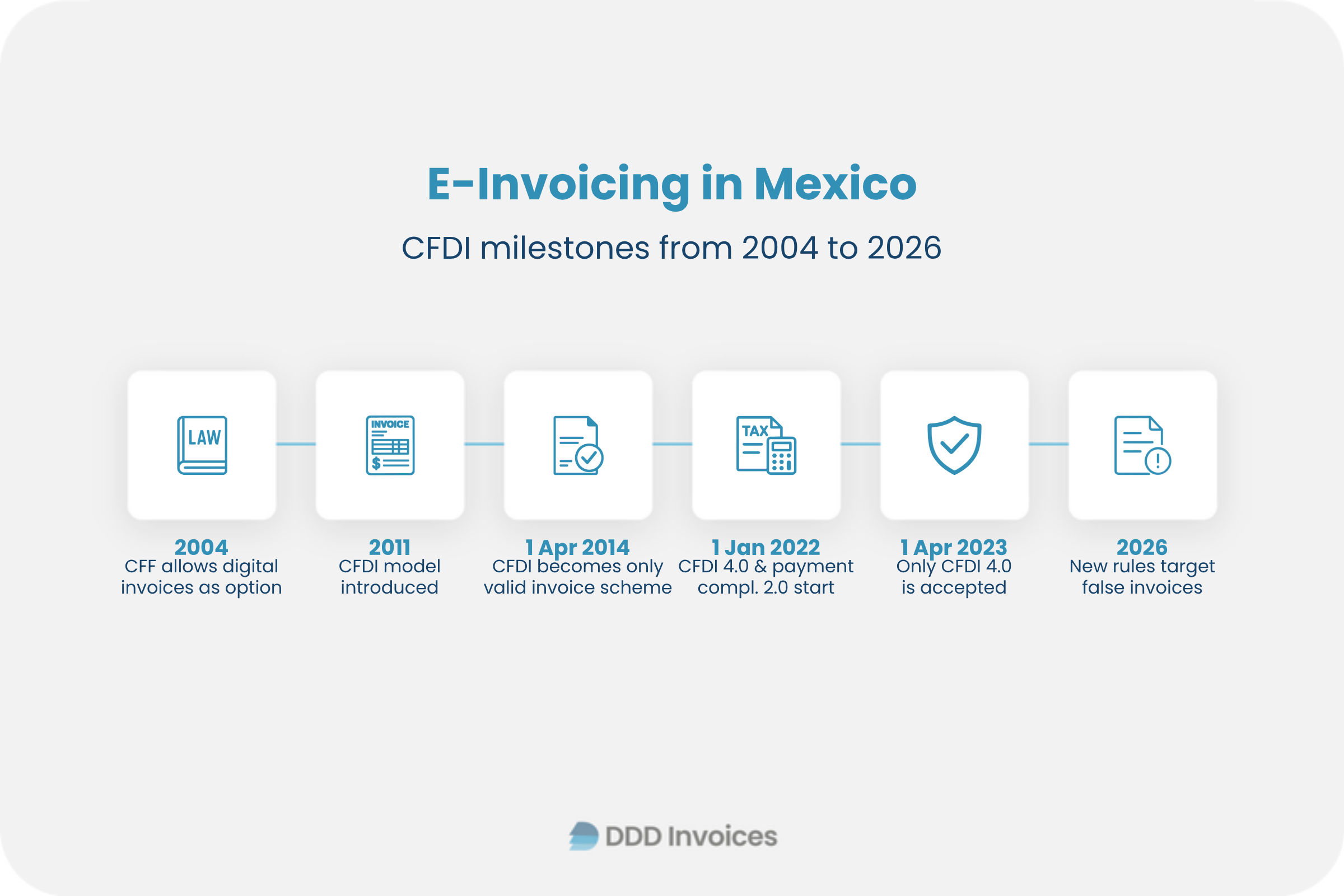
- 2004: The CFF first allowed digital invoices as an option.
- 2011: The CFDI model was introduced.
- April 1, 2014: CFDI became the only valid invoicing scheme.
- January 1, 2022: CFDI 4.0 entered into force, and payment complement 2.0 took effect alongside it.
- April 1, 2023: CFDI 4.0 became the only accepted version.
- 2026: New CFDI rules add measures against false invoices.
B2G electronic Invoicing in Mexico
B2G e-invoicing is mandatory in Mexico for transactions subject to fiscal invoicing requirements. Suppliers to government bodies must issue a CFDI under Articles 29 and 29-A of the Federal Tax Code. Government procurement falls within the CFDI framework rather than requiring a different B2G invoice format. In the PAC-based process, certification known as CFDI timbrado or CFDI stamping in Mexico validates the document, assigns its fiscal folio and incorporates SAT’s digital seal before delivery to the customer.
Public bodies must also issue CFDI for the contributions, productos and aprovechamientos they collect and the support or incentives they grant. They must require CFDI from third parties they pay where legally required, according to SAT’s public bodies guidance.
B2B electronic Invoicing in Mexico
Domestic B2B transactions subject to invoicing use CFDI 4.0. Where payment is deferred or made in installments, the invoice is generally issued as PPD and followed by the REP 2.0 payment complement. Under RMF 2026, the payment CFDI must be issued no later than the fifth calendar day of the following month. The REP is a Pago-type CFDI, not a credit note, which is an Egreso.
CFDI cancellation rules require reason code 01, 02, 03 or 04. Where the recipient's acceptance is required, they have three business days to respond, and no response is treated as acceptance. Acceptance is not required for certain cases, such as payroll, egreso, traslado, public-in-general and foreign-resident invoices. Cancellation is not unilateral or unlimited, and it must meet the Article 29-A deadline.
B2C e-Invoicing in Mexico
Consumer transactions also sit within the CFDI framework. For sales to the general public where customers do not request an individual CFDI, taxpayers may issue a global CFDI Mexico using the generic RFC XAXX010101000 and the recipient name “PUBLICO EN GENERAL".
RMF 2026 permits daily, weekly or monthly periods, subject to the applicable conditions. For transport and logistics, the Carta Porte complement applies to covered movements of goods. CFDI 4.0 with Carta Porte version 3.1 has been the valid combination since July 17, 2024.
E-reporting and VAT compliance
CFDI does not replace periodic VAT reporting. VAT is generally calculated monthly and filed by the 17th of the following month, and SAT's VAT return service uses the CFDI you issued and received to prefill return data. SAT businesses should also retain their CFDI XML files, because Article 30 CFF generally requires accounting and supporting documentation to be kept for five years.
You can connect in three ways: directly to a PAC, through an ERP that works with a PAC, or through an e-invoicing API. Before you start, validate your CSD, clean your recipient master data, map the CFDI types and complements you use, and set up cancellation workflows. Retain the stamped XML, not only the PDF.
What happens if businesses don't comply?
CFDI that fail Articles 29 or 29-A may lose their ability to support tax deductions or credits. SAT may also restrict or suspend the CSD in specified cases. False CFDI can trigger the Article 49 Bis procedure and potential criminal consequences under Article 113 Bis.
Preparing for e-Invoicing in Mexico
Mexico requires every CFDI to be created as XML, sealed with the issuer's CSD, stamped by a SAT-authorized PAC and delivered to the customer. Cancellations, payment complements and the 2026 anti-false-invoice rules add further steps for businesses that issue at volume. The stamped XML is the invoice, and it must be kept for five years.
DDD Invoices provides an API-first compliance layer that keeps local invoice formats, validations and transmission rules behind one standardized REST API. Software providers and multi-country businesses can add CFDI workflows to their existing ERP, billing or platform without maintaining separate logic for every market.
Still have questions?
In the 30min free call we will discuss:
- your requirements in invoicing
- how integration works
- demo of the product
- next steps
FAQs
Is e-invoicing mandatory in Mexico?
Yes. Taxpayers required to issue invoices must issue a CFDI under Articles 29 and 29-A CFF. A CFDI has no tax validity until a SAT-authorized PAC has stamped it.
Is a PDF invoice a valid CFDI?
No. The stamped XML is the invoice. The PDF is only its printed representation and cannot replace the XML file.
What is a PAC in Mexico?
A PAC is a SAT-authorized provider that validates and stamps CFDI. It assigns the UUID, adds the SAT seal and sends the certified CFDI to SAT.
How long must CFDI records be kept?
Five years under Article 30 CFF. The period runs from the date the related tax returns were filed, or should have been filed, not from the invoice date.


