For ERP providers

E-invoicing compliance infrastructure for ERP platforms

Embed e-invoicing into your your ERP invoice flow, so your customers can issue, receive, archive and monitor locally compliant e-invoices across markets.

Test for free. Move to production when ready.

Why it matters

Scaling your ERP gets harder when every market has own invoicing rules

Your customers expect invoicing to work inside the ERP they already use, but every country has its own formats, e-invoicing rules, fiscalization, tax authority connections and reporting requirements.

DDD gives your ERP one compliance infrastructure behind the invoice module, so compliance doesn't become a permanent product burden.

ERP invoicing complexity across markets

Add local invoice compliance to your ERP without rebuilding it country by country

With DDD, your ERP can support:

Issued invoice flowsReceived invoice flowsB2B, B2G and B2C invoice requirementsE-invoicing where requiredFiscalization where required
Invoice archive and historyDashboard visibilityMulti-entity invoice operations
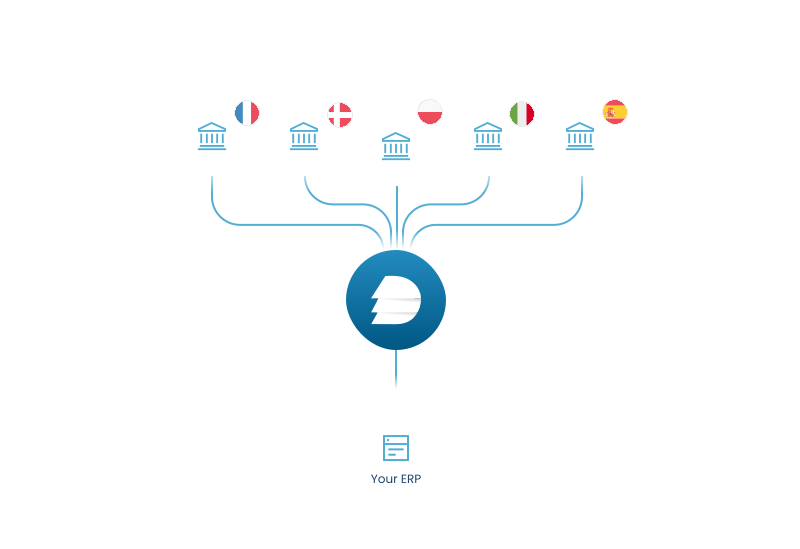
ERP connected to centralized compliance layer

Move e-invoicing compliance out of ERP localization

Local e-invoicing compliance is often placed inside ERP localization. DDD moves it into one central compliance layer, connected through a unified API, so local rules stay outside each country setup.

  • Central compliance layer instead of localization-level e-invoicing logic
  • One unified API between your ERP and country-specific rules
  • Local formats, fiscalization and tax authority connections handled by DDD
  • Cleaner ERP localization structure across markets

Do not make every local mandate your roadmap item

Building internally

  • Maintaining local formats
  • Maintaining local tax authority connections
  • Connecting fiscalization logic
  • Country specific archiving rules

Using DDD

  • Single compliance infrastructure
  • 100% behind your ERP
  • Support your customers across all markets
  • Less internal compliance work
Start free integration

FAQ

Common questions from ERP teams

Explore other use casesin more detail

See how the same platform model adapts to different software categories.