Companies with multiple legal entities

One place to control invoicing across all entities, systems, and countries

Use one operational setup across subsidiaries, connect multiple systems and countries, and keep visibility across the group without fragmenting invoice operations.

See how it works

Built for organizations that need both local entity control and group-level visibility.
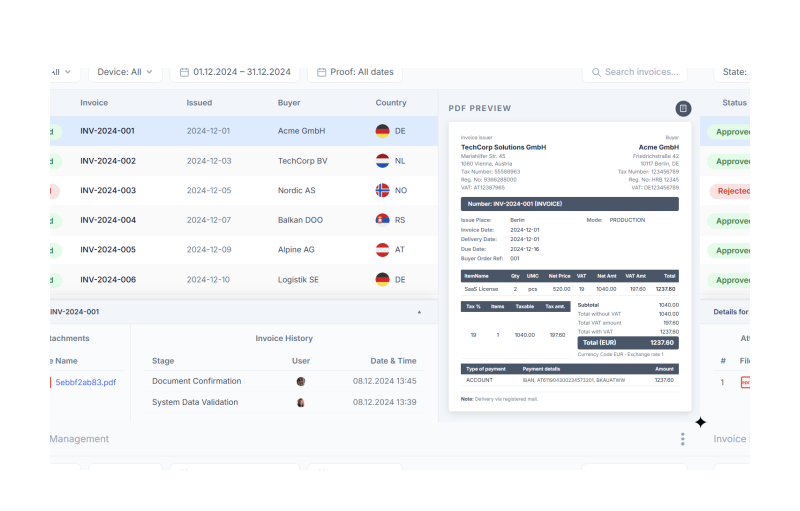
Group invoicing control across entities, systems, and countries
SubsidiariesEntity controlSystems & countriesConsolidated view

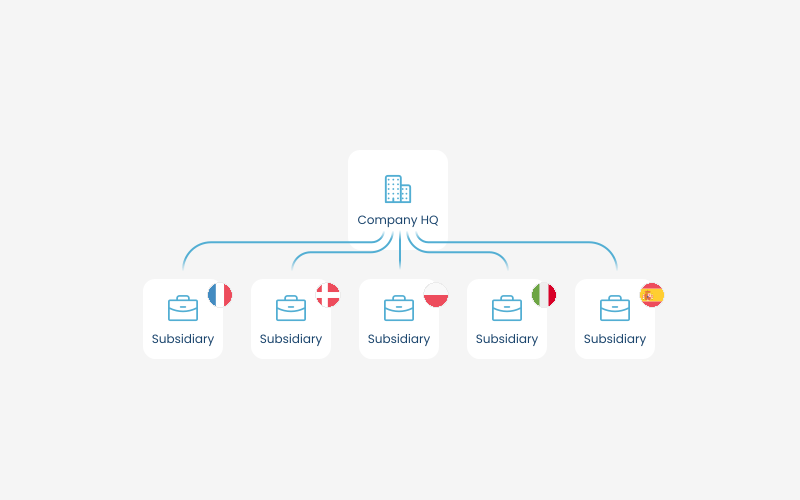
Bring multiple legal entities into the same environment, so the group works through one connected setup instead of isolated local invoice flows.
  • Keep each entity visible and manageable
  • Reduce fragmentation across the group
  • Support future growth without rebuilding the setup
  • Same integration across the group
Connected structure across multiple legal entities and subsidiaries
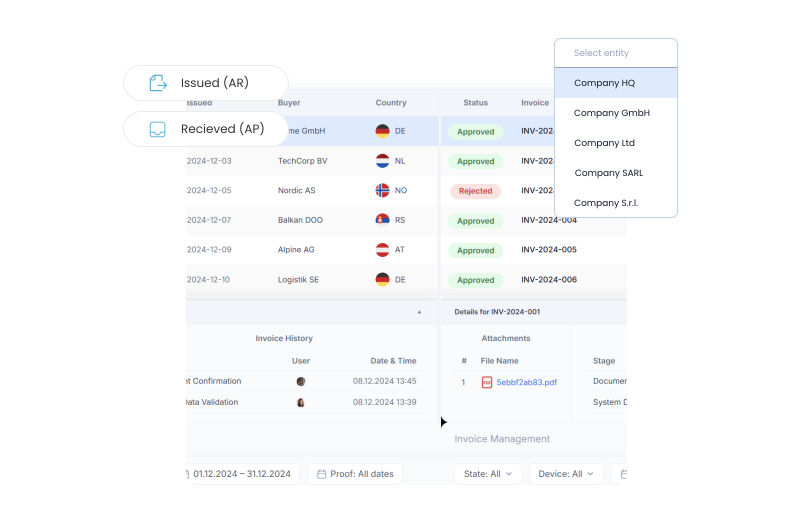
AR and AP invoice flows managed per legal entity

Manage AR / AP invoice flow per entity

Keep invoice operations organized at entity level while still maintaining visibility across the broader group.

  • Separate outgoing and incoming invoice flows per entity
  • Better local operational ownership
  • Clearer control without isolated tools

Connect all systems and countries

Centralize multiple systems and countries into one structure, so teams can work across entity, market, and system complexity without creating separate invoicing setups for each case.
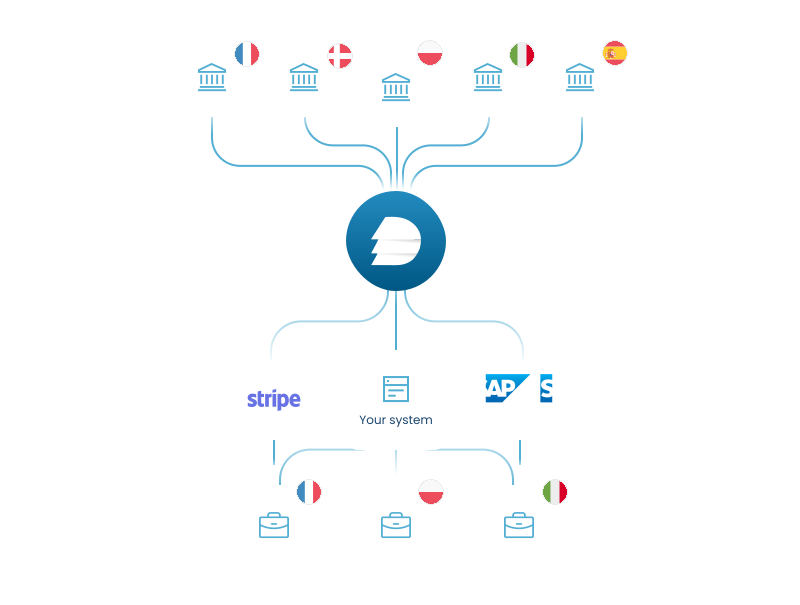
  • Connect systems across the group
  • Connect countries under one structure
  • Support mandate and non-mandate environments
  • Reduce country-by-country fragmentation
Systems and countries connected under one group structure
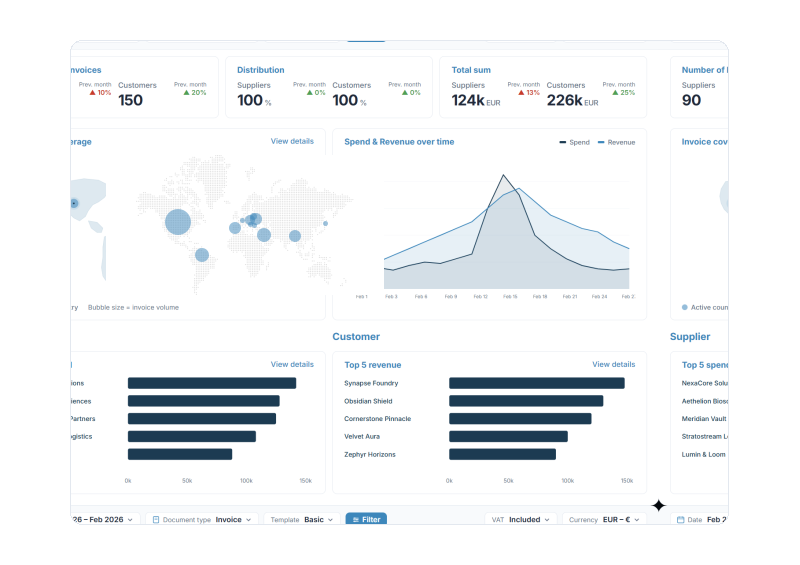
Consolidated dashboard view across the whole group

Use one consolidated view across the whole group

Monitor entities, systems, and invoice operations from one consolidated dashboard view. Access real time revenue data in real time - instead of switching between separate local environments.

  • Consolidated view across the group
  • Better visibility across countries and entities
  • Revenue visibility across connected markets
  • Faster detection of local issues

Assign roles across local, global, technical, and operational teams

Support the real structure of the organization with roles that match how the group actually operates across headquarters, subsidiaries, technical teams, and operational teams.
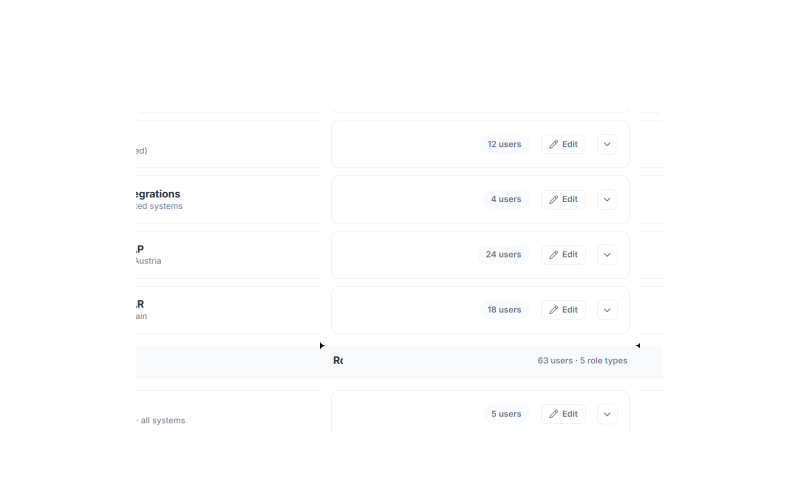
  • Global and local admins
  • Technical and operational roles
  • Better separation of responsibility
  • More control across multi-entity teams
Role assignments across local, global, technical, and operational teams
AI processing for incoming documents across entities and countries

Add AI processing where incoming document complexity increases

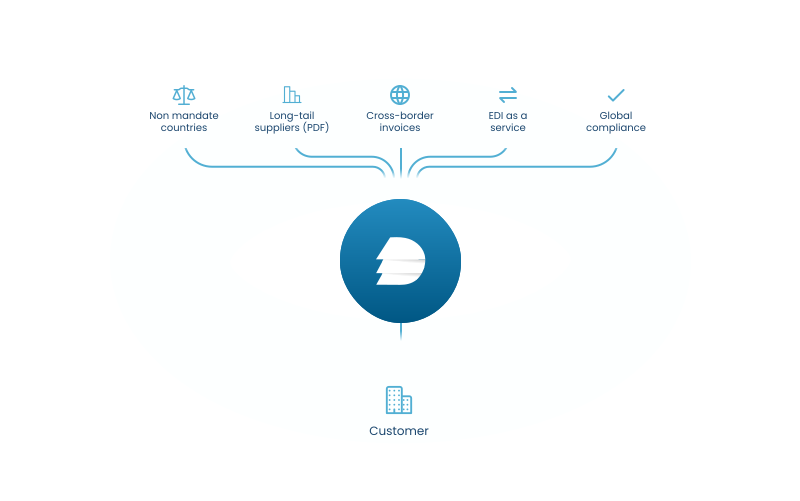
Centralize and automate all AP flows and go 100% digital from Day 1. For groups handling inbound invoice complexity across entities and countries, AI-supported processing can help standardize and move invoice data faster into the right downstream flow.

  • Cover mandate and non mandate countries in one flow
  • Turn all files into structured usable data
  • Helpful for more fragmented AP environments
  • Supports structured data across entities

For groups operating across multiple legal entities

How multi-entity groups use DDD

Multi-entity groups need one structure that keeps invoice operations connected across subsidiaries, countries, systems, and teams - without losing control at entity level.

Group finance teams

Keep invoice operations connected across subsidiaries without forcing everything into one local model

For finance teams

  • one connected structure across subsidiaries
  • better entity-level control
  • less operational fragmentation

Regional operating groups

Connect systems and countries under one structure instead of managing isolated local setups

For groups operating in multiple countries

  • connect countries and systems
  • improve consistency across the group
  • reduce country-by-country complexity

Groups with inbound document complexity

Standardize incoming invoice data across entities and internal systems

For organizations operating across multiple subsidiaries

  • structure incoming invoice data across entities
  • reduce manual handling across teams
  • support cleaner AP and internal processing flows
Start for free

USE CASE

This is how it's done.

Video Thumbnail

“The APIs are shared, clean and flexible. It was very easy and clear for us.”

FAQ

Frequently asked questions