As companies expand internationally, many countries are enforcing structured electronic invoices and fiscal reporting, making reliable infrastructure solutions essential for software platforms.
This landscape offers businesses new opportunities: embed compliance invisibly into your platform, or optimize recurring revenue with advanced subscription management. Whether you’re navigating multi-country regulations or scaling SaaS subscriptions, the right platform can streamline your operations.
Chargebee: Subscription Monetization Platform
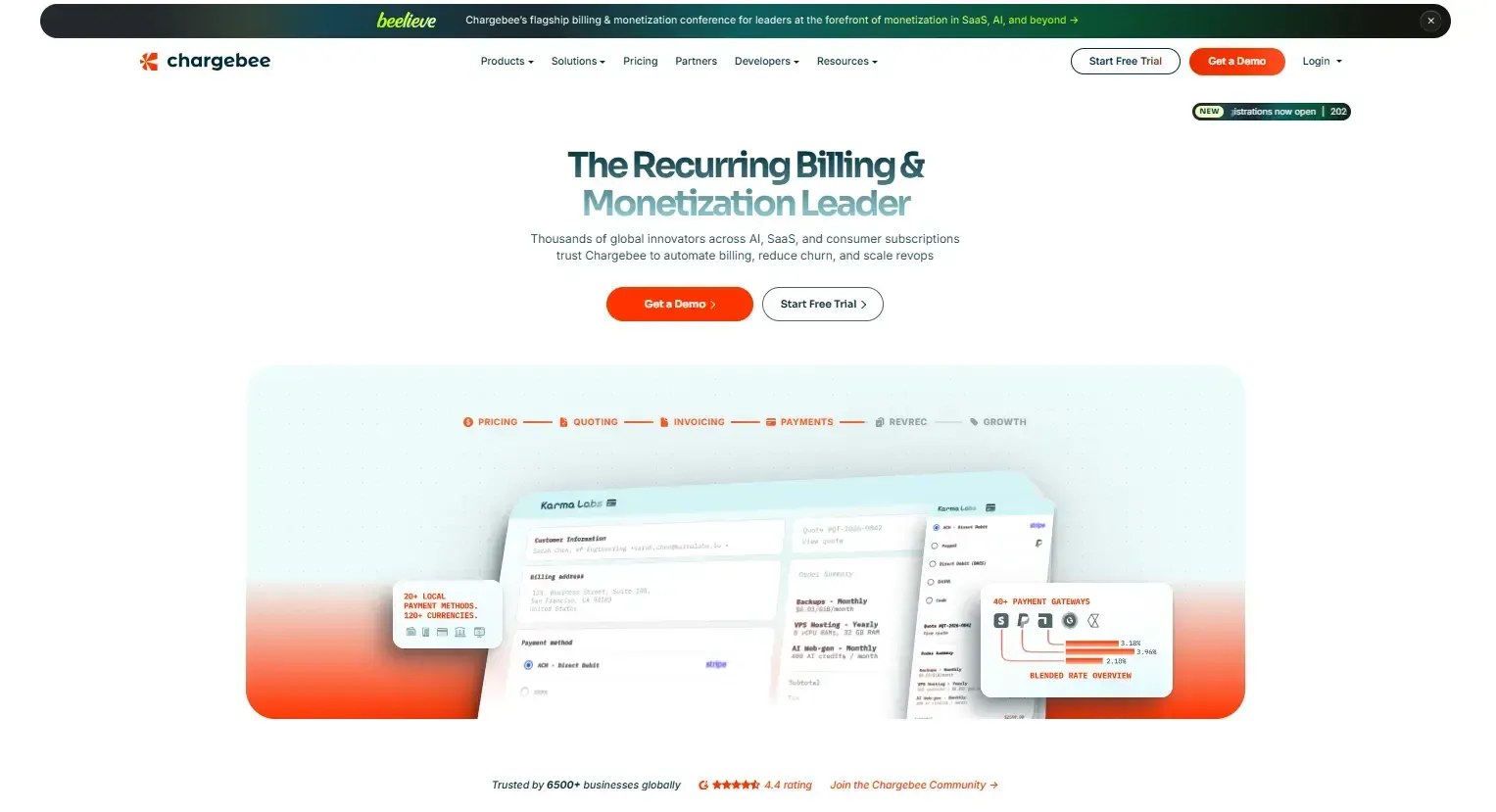
Chargebee is a subscription billing and revenue management platform designed to automate recurring billing, manage complex subscription lifecycles, and provide revenue analytics for SaaS and subscription businesses.
Strengths
- Advanced subscriptions: recurring, usage/tiered/hybrid, trials, upgrades, add-ons, proration.
- Revenue recovery: dunning, retries, taxes, recognition.
- Entitlements: plans, bundles, limits.
- Checkout/portals: hosted/embedded, self-serve.
- Integrations: Stripe, PayPal, Xero, Salesforce.
- Analytics: MRR, churn, cohorts.
- AI pricing: metering, credits.
Target Users
- Recurring revenue SaaS (B2B/B2C).
- Teams scaling beyond spreadsheets.
- Global ops with multi-currency/gateways.
- RevOps tracking metrics/pricing tests.
Limitations
- Pricing scales with revenue; advanced features add cost.
- Complex technical implementation.
- Lengthy migration (months).
- No dedicated e-invoicing compliance.
Chargebee and DDD Invoices: Powering Revenue and Compliance Together
Chargebee and DDD Invoices complement each other in the billing ecosystem: Chargebee manages subscription billing, pricing, and revenue ops; DDD ensures multi-country e-invoicing compliance.
Integrate them for seamless workflows Chargebee handles customer-facing billing/recurring revenue, while DDD generates compliant structured invoices behind the scenes. Monetize efficiently without sacrificing revenue management or legal adherence.
Ready to integrate Chargebee + DDD for automated revenue and global compliance?
Book a call
DDD Invoices: Compliance Infrastructure Layer
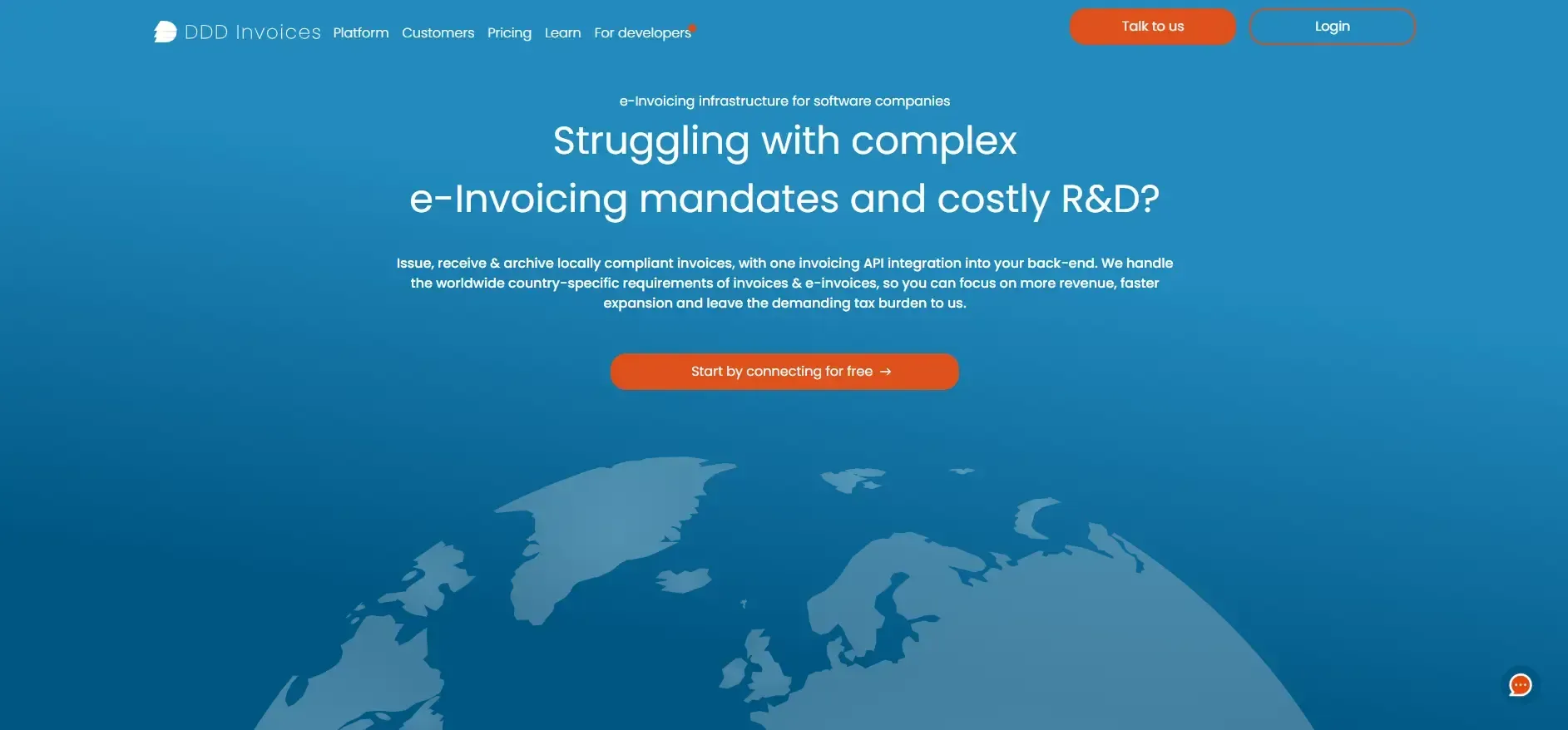
DDD Invoices is an API-first e-invoicing and compliance infrastructure designed primarily for software providers to embed white-label invoicing into their platforms.
Strengths
- Embed compliant invoicing in ERP/SaaS/marketplaces/POS no country-specific logic needed.
- White-label: Native product feel.
- Local regulatory compliance and e-invoicing.
- Auto-reporting to tax authorities; secure archiving.
- Unified API for multiple countries.
- Central dashboard oversight, invisible to users.
Target Users
- Software providers and platforms (ERP, vertical SaaS, marketplaces, POS).
- Companies operating across multiple regulated invoicing markets.
- End clients with multi-country entities seeking unified e-invoicing infrastructure.
Limitations
- Not a full billing/RevOps platform.
Understanding the Core Difference
Category | DDD Invoices | Chargebee |
Core Product & Primary Focus | E-invoicing & Compliance Infrastructure: structured e-invoices, fiscalization, reporting, archiving | Subscription Billing & Monetization: Recurring Billing, Subscriptions, Payments |
| | |
Platform Model | API-first infrastructure layer | SaaS billing platform |
Typical Integration | Embedded into ERP, SaaS, POS, marketplaces | Connected to payment gateways and SaaS products |
Target Users | Software providers, platforms, multi-entity businesses | SaaS businesses, subscription-first companies |
Geographic Focus | Multi-country e-invoicing compliance | Global billing and payment operations |
Interface | Standardized API with optional white-label integration | Hosted dashboards, subscription management tools |
Technical Role | Compliance layer within existing software | Billing engine for subscription businesses |
Depth vs Width | Width: broad country coverage | Depth: complex subscription/RevOps features |
Strategic Choice of Provider
The right setup depends on your business structure and billing needs, especially for subscription-based companies operating across multiple markets.
- Chargebee handles subscription billing, recurring payments, and revenue operations.
- DDD Invoices ensures compliant, multi-country e-invoicing and tax regulations.
Together, they provide seamless workflows, regulatory compliance, reduced risk, and simplified global scaling for subscription-based businesses.
Trust Other Businesses
DDD Invoices provides reliable, infrastructure-level e-invoicing for ERP systems, SaaS platforms, marketplaces, and POS providers. By embedding compliant invoicing directly into your platform, you can launch features faster, reduce compliance development costs, and expand into new markets more easily.
For example, Zenoti maintained its own UI while using DDD Invoices for real-time compliance reporting during its European expansion, allowing the company to enter a new market without changing its core codebase. This shows how platforms can keep their existing systems and user experience while DDD Invoices handles the compliance requirements in the background.
Want to see a real-case demo like Zenoti's?
Want to see some real examples?
See real case-studies
Take me there
FAQs
What is the main difference between Chargebee and DDD Invoices?
Chargebee is a subscription billing and revenue management platform, while DDD Invoices is e-invoicing compliance infrastructure handling structured invoices, fiscalization, and regulatory reporting.
Can a company use both platforms together?
Yes. Companies often use Chargebee for subscription billing and DDD Invoices for multi-country e-invoice compliance and reporting.
Who typically integrates DDD Invoices?
Software providers like ERP systems, SaaS platforms, marketplaces, and POS providers that want to embed invoicing capabilities directly into their products.
Does Chargebee support international billing?
Yes. It supports multi-currency billing and integrations with multiple payment gateways, suitable for global SaaS businesses.
Why is e-invoicing infrastructure important for software platforms?
It ensures invoices comply with local formats, reporting requirements, and archiving rules, especially as e-invoicing regulations expand globally.
What does “API-first invoicing infrastructure” mean?
It allows developers to embed invoicing directly into software products via APIs, keeping full control over user interface and workflows.