All About E-Invoicing in North Macedonia
North Macedonia’s Mandatory B2B and B2G E-Invoicing via e-Faktura from Q3 2026, Pilot Testing from January 2026, Future-Ready B2C E-Invoicing Expansion
Last modified on 2025-12-18 in Blog
n/a
n/a
Управа за јавни приходи
n/a
2024
2024
10 years
North Macedonia is starting to move into a significant transformation in its invoicing and tax compliance systems with the introduction of mandatory electronic invoicing. Through its national e-invoicing platform, e-Faktura, North Macedonia is joining other European countries that have embraced digital invoicing.
North Macedonian businesses must comply with mandatory e-invoicing through the e-Faktura platform or face automatic invoice rejection and penalties. With pilot testing beginning January 1, 2026, businesses have limited time to integrate their systems and avoid compliance disruptions that could impact cash flow and operations.

On June 27, 2025, North Macedonia's Public Revenue Office (PRO) and the Ministry of Finance presented the national e-Faktura reform to the Prime Minister and the media, marking a historic milestone in the country's digital transformation journey. The project officially commenced on July 1, 2025, with authorities emphasizing their commitment to promoting modernization, fair market competition, and enhanced fiscal discipline.
The reform demonstrates North Macedonia's strategic alignment with European Union standards and its commitment to creating a robust digital infrastructure that will support economic growth and transparency.

Tired of scrolling through information about e-invoicing?
E-invoicing goes beyond digitizing paper invoices, it creates machine-readable, structured documents that enable automatic processing, seamless accounting system integration, and instant tax authority reporting.
North Macedonia is implementing e-invoicing to tackle VAT fraud through real-time transaction monitoring while accelerating VAT refunds that improve business cash flow. The system reduces manual processing errors, speeds up payment cycles, and ensures legal authenticity through certified digital signatures.
While larger corporations may already operate advanced internal solutions, nationwide adoption is gathering momentum as authorities focus on the long-term benefits of transparency and efficiency. This digital shift also aligns North Macedonia with EU regulations and standards like EN 16931, positioning North Macedonian businesses for seamless cross-border trade in Europe's increasingly connected marketplace.
The gradual and consultative approach adopted by North Macedonian regulators helps build confidence across the business landscape, with particular focus on supporting small and medium-sized enterprises that form the backbone of the country's economy.
The e-Faktura system establishes a centralized, real-time platform for all non-cash invoicing transactions, following a Continuous Transaction Controls (CTC) model. This approach ensures that invoice data flows through a central platform operated by the PRO, with invoices transmitted in real time upon issuance for immediate registration and validation.
The e-Faktura platform incorporates several advanced features designed to streamline invoicing processes:
The public sector in North Macedonia will require all public offices to use the e-Faktura platform for electronic invoicing. The project officially started on July 1, 2025.
From January 1, 2026, select businesses will pilot the system, testing API integrations and digital signatures. By the third quarter of 2026, it will be mandatory for all public offices to accept and process electronic invoices through e-Faktura.
Invoices sent to public entities must be digitally signed to confirm authenticity and include required government identifiers. The system automatically validates invoices in real time and rejects those that do not meet legal or technical requirements. This process improves transparency, efficiency, and compliance in public procurement.
Beginning Q3 2026, every domestic B2B invoice in North Macedonia must be issued and submitted through the e-Faktura platform using XML and UBL formats. The system follows European standards while ensuring compatibility with local business requirements.
Each invoice undergoes real-time compliance checks, receives a unique e-Faktura identifier and timestamp, and is archived securely for the required retention period. This ensures traceability and audit readiness while reducing risks associated with tax evasion.
Firms are expected to integrate their ERP or accounting software with the e-Faktura API, allowing automatic generation, submission, and retrieval of invoices, reducing manual errors and improving operational workflows.
Key requirements include:
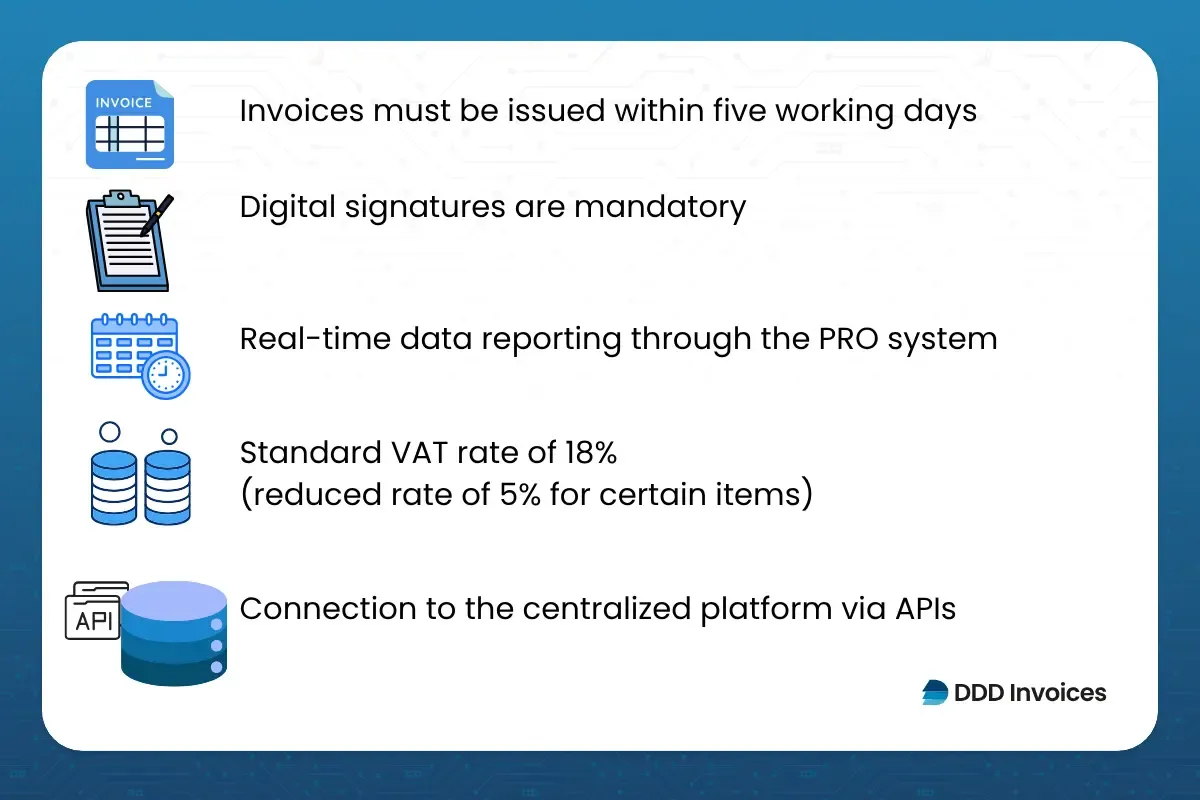
By prioritizing the advantages of digital invoicing, such as compliance, operational streamlining, and improved security, North Macedonia is laying the foundation for a safer, more connected, and competitive economy.
Currently, specific B2C e-invoicing requirements through the e-Faktura platform have not been fully defined. However, the system is designed with future expansions in mind and may support consumer access to electronically issued invoices, adding transparency and convenience.
The North Macedonian government is likely to consider extending the mandate to B2C invoicing as part of ongoing digital fiscal reforms, following the lead of other European countries that have implemented comprehensive electronic invoicing systems.
North Macedonia's fiscalization system relies on certified hardware devices, such as fiscal printers and cash registers (e.g., Daisy FX 1300, Synergy PF-500, Expert SX), which generate unique fiscal receipts with QR codes for real-time reporting to the Public Revenue Office (PRO).
These devices connect via USB or IoT interfaces to POS systems in cafes, shops, and retail outlets, handling over-the-counter cash transactions with mandatory electronic validation to prevent tax evasion
North Macedonia is enhancing its VAT monitoring and reporting capabilities by implementing an electronic invoicing system that connects with national tax authorities. This approach supports ongoing oversight of VAT compliance, facilitates more efficient processing of VAT-related matters, and helps address issues of tax fraud and evasion. Additionally, the country is moving toward adopting standardized electronic reporting formats like SAF-T to streamline accounting data submissions.
Choosing the right e-invoicing provider is key to easily meeting North Macedonia's new rules. Providers need to support smooth integration with e-Faktura, convert invoices into the required XML and UBL formats, submit them automatically, and handle errors efficiently.
As your trusted e-invoicing partner, we deliver direct system connectivity that fully automates your invoice lifecycle, from creation through transmission to secure archiving. We, DDD invoices transform complex compliance requirements into streamlined operations that protect your business and enhance efficiency.
Our experience simplifies complex compliance, ensuring your invoicing is accurate, automated, and aligned with the country’s mandatory rollout starting in 2026.
Still have questions?
In the 30min free call we will discuss:
Mandatory e-invoicing through e-Faktura starts in 2026 for all VAT-registered businesses. Pilot testing begins January 1, 2026.
e-Faktura makes invoicing easier by checking invoices in real-time, giving each invoice a unique ID, and storing them safely. This helps prevent fraud, speeds up VAT refunds, and ensures compliance with tax regulations.
Businesses must use XML and UBL formats that follow European standard EN 16931, ensuring compatibility with both local requirements and international trading partners.
Yes, non-compliance can result in significant fines, loss of VAT deduction rights, and potential exclusion from government procurement. Early preparation is essential to avoid these penalties.
Foreign companies conducting business in North Macedonia must comply with local e-invoicing requirements. The system supports cross-border transactions while maintaining compliance with international standards.
Written by the Compliance team
Reviewed by Denis V. P.

DDD Invoices is an enterprise-grade platform delivering a powerful infrastructure for creating, sending, receiving and storing electronic documents. DDD Invoices enables software providers like ERPs, SaaS, eCommerce, POS systems, accounting & invoicing softwares, billing services and others, to easily adhere to global invoicing compliance requirements and shorten their time-to-market.