Build vs Buy E‑Invoicing: Decision Guide for Finance Teams
Build vs buy e‑invoicing: compare in‑house builds vs APIs to cut compliance risk, total implementation cost, and engineering workload.
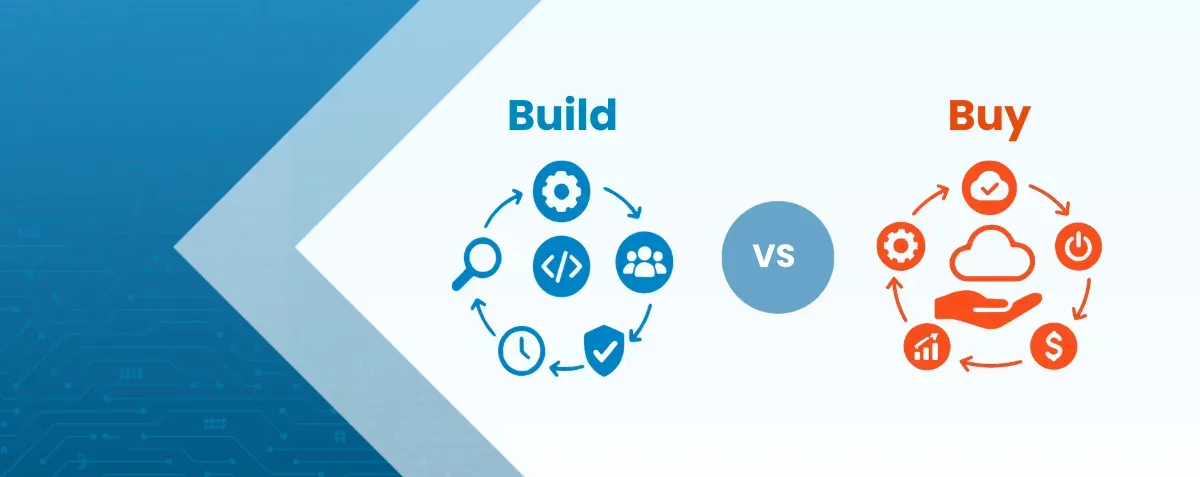
The leadership team thought e‑invoicing would be just another compliance task. A few ERP changes, maybe a connector to the tax authority and then back to business as usual. Within months, it became clear this was not a project; it was a new product the company had silently chosen to build and maintain forever.
Tax started forwarding mandate updates. IT owned a growing backlog of tickets about failed submissions and changing XML schemas. Finance had to explain delayed cash collection and blocked invoices to the business. What started as a simple build vs buy e‑invoicing conversation was now a strategic dilemma: do we really want to own our own e‑invoicing infrastructure?
On paper, building in‑house looks logical.
You already have developers, you know your ERP and billing landscape, and “custom” feels like control and long‑term savings. In board decks, build often wins because vendor fees look bigger than a few extra sprints.
In reality, three types of pain show up quickly:
Instead of debating “Can we build this?”, finance leaders get better answers when they ask, "What are we committing to own for the next 5–10 years, and is that where we want our teams to spend their time?"
Here’s a practical lens for the build vs buy decision:
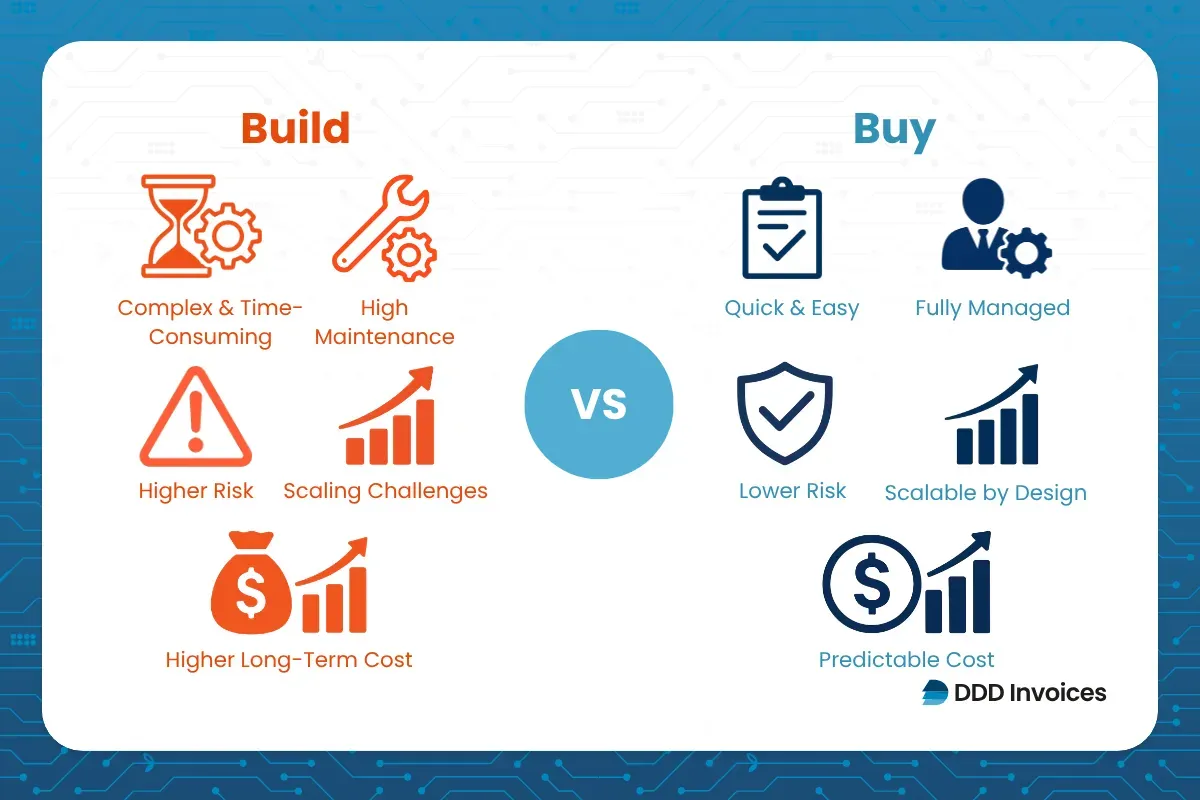
For some organisations, especially with simple, local needs, building is still a defendable choice. For everyone else, the build vs buy e‑invoicing decision increasingly points to buying a specialised API and focusing internal talent on the core product.
The first version usually looks like a success: you go live, invoices flow, and dashboards are green. The real test comes as mandates like Italy’s SDI and France’s PDP/PPF model keep changing formats and rules over time.
Complexity creeps in through three main channels:
At this point, you are running a single global e‑invoicing API, with all the operational, compliance, and product responsibilities that implies.
By the time most teams reach the build vs buy e‑invoicing decision, they are already experiencing resource constraints and roadmap pressure.
Across organisations, a consistent pattern emerges: teams spend months and significant budget attempting to “just integrate with the portal", only to discover that frequent XML schema updates, validation changes, and country-specific requirements turn it into a long-term maintenance responsibility.
Buying an e‑invoicing API from a specialist like DDD Invoices is less about licence cost and more about reducing long‑term risk and protecting scarce product and engineering capacity.
DDD Invoices is purpose‑built as invisible infrastructure:
Still have questions?
In the 30min free call we will discuss:
Building remains an option if your scope is narrow and relatively static and you have a clear commitment to fund and staff e‑invoicing as a long‑term internal product, not a one‑off project.
Teams usually underestimate maintenance, monitoring, production incidents, regulatory tracking, and the opportunity cost of diverting developers from core product work.
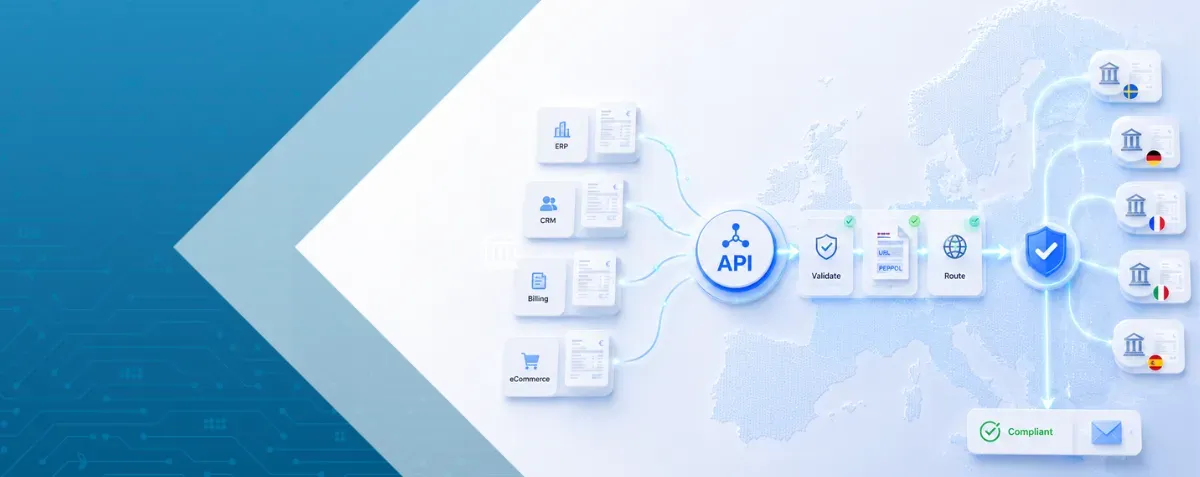
A specialist provider tracks rule changes, updates integrations, and hides country‑ and portal‑specific tweaks behind a stable API, reducing failed invoices, non‑compliance, and rework.
Look for a unified API, proven multi‑entity or platform use cases; strong security and uptime; a clear roadmap and support; and the option to white‑label or embed it into your own product.
Written by the Compliance & Growth Team
Reviewed by Denis V. P.



DDD Invoices is an enterprise-grade platform delivering a powerful infrastructure for creating, sending, receiving and storing electronic documents. DDD Invoices enables software providers like ERPs, SaaS, eCommerce, POS systems, accounting & invoicing softwares, billing services and others, to easily adhere to global invoicing compliance requirements and shorten their time-to-market.
.webp&w=3840&q=75)